In mid-2025, right after the final member of BTS, the biggest band in the world, had served out the mandatory military service required of every able-bodied male in South Korea, the seven members of the group decamped for Los Angeles to reunite under one roof.
The seven—RM, Jin, Suga, J-Hope, Jimin, V, and Jung Kook—had been in the band together since the early 2010s, when they were all still teenagers, but had not lived in the same place since 2019. After a few years apart, fulfilling their service and tending to solo careers, it was time to get back to work.
“We’d do six days a week, like businessmen,” says RM, the band’s leader. They followed a strict routine: training together in the gym in the morning, coming back home for lunch, reporting to the studio by 1 p.m., and working with various songwriters and producers on new songs until about 8 p.m., after which they’d all go back home.
Living in one house as roommates once again, BTS were inadvertently doing a simulation of life before superstardom, back to their days as trainees for Big Hit Entertainment (later rebranded as Hybe Corporation) when they would’ve given anything just to debut. This was before they sold over 500 million units and racked up over 104 billion streams worldwide. Before they became the first Korean band to be nominated for a Grammy, to top the Billboard 200 album chart and the Billboard Hot 100 singles chart, to speak at the United Nations. Before they became a global cultural force, the best-selling Asian act ever, and one of the best-selling groups—of any genre, any nation, any time—period.
By now, the BTS mythology is well-worn: In 2010, Big Hit Entertainment, then an underdog record label in Seoul, signed a 16-year-old RM, who was already making a name for himself as a prodigious rapper in the local underground hip-hop scene. Suga, a songwriter and rapper who also had a presence in that scene, and J-Hope, a B-boy dancer turned rapper, joined shortly after. Sensing a more lucrative opportunity, the company changed its plans and turned the hip-hop trio into a K-pop band—eventually creating a unique seven-member lineup that bridged the edginess of the underground rappers with the shiny commercial appeal of a more traditional idol group.
By now, the BTS mythology is well-worn: In 2010, Big Hit Entertainment, then an underdog record label in Seoul, signed a 16-year-old RM, who was already making a name for himself as a prodigious rapper in the local underground hip-hop scene. Suga, a songwriter and rapper who also had a presence in that scene, and J-Hope, a B-boy dancer turned rapper, joined shortly after. Sensing a more lucrative opportunity, the company changed its plans and turned the hip-hop trio into a K-pop band—eventually creating a unique seven-member lineup that bridged the edginess of the underground rappers with the shiny commercial appeal of a more traditional idol group.
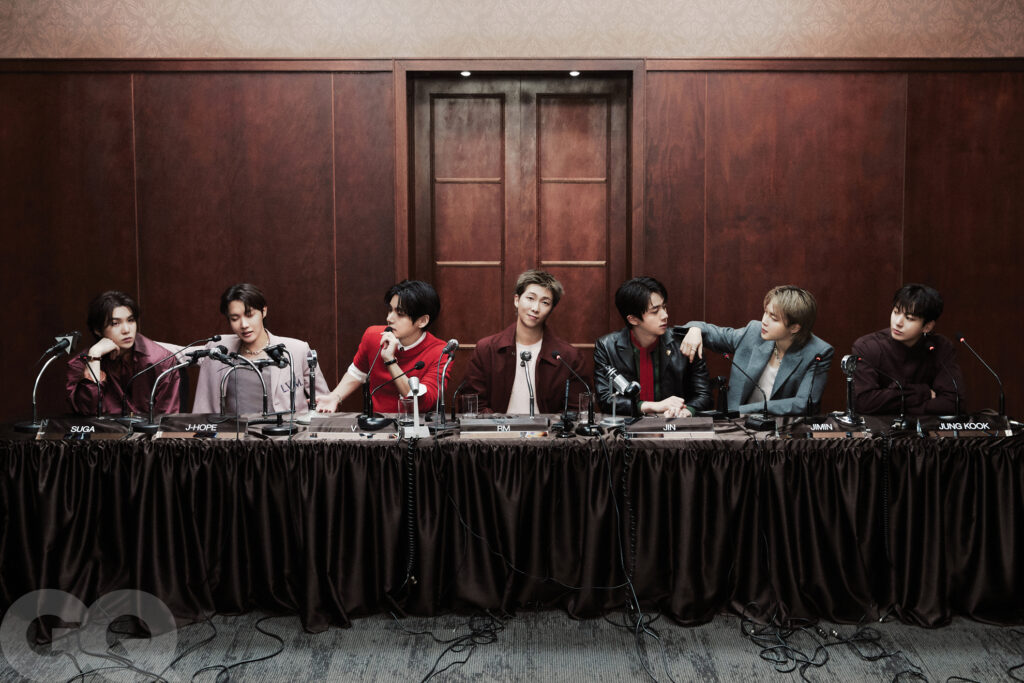
For the sentence in the story about the timing of the band’s break, please change it to: “The band and I are together in a studio about an hour away from Seoul, the first interview they’ve granted as a group since announcing a break in 2022, and I find myself immediately disarmed by their camaraderie – which feels both reassuring and hard-won. In December, RM went live on Weverse, the community platform of Hybe, and confessed to fans that he had thought of disbanding the group “thousands of times” ahead of their comeback. The livestream sent shock waves through ARMY (Adorable Representative MC for Youth), the band’s exceedingly global, impressively strategic and lovingly protective fanbase.
“The personal pressure is huge,” he said on the 6 December livestream. “Since last month, I haven’t even been able to sleep. I was thinking about whether I should get a prescription for sleeping pills… I’ve wondered thousands of times, Would it be better for the team to disband or go on hiatus?”
The strain is understandable; the stakes are almost too high. Nearly six years on from their last studio album, can BTS – which stands for Bangtan Sonyeondan, or Bulletproof Boy Scouts, and later evolved into Beyond the Scene – deliver a body of work that meets the anticipation from that long wait? Almost four years after they last performed together, is the magic still there? Or has their time apart changed them in ways that make it difficult to go back to the way things were? Added to all of that is the fact that, in helping bring South Korea’s music scene to the centre of global pop, they also have the hopes of an entire nation on their backs – not to mention the adoration and dreams of their earth-spanning ARMY.
As they’re sitting down together for this interview, and mostly speaking through a translator, the topic of RM’s Weverse live – the crash-out heard round the world – naturally comes up. “I think I have some memes because of that livestream,” RM says, laughing.
How did the other members feel?
“Actually, none of us watched that video of the live-streaming,” V says.
“We would only watch short YouTube Shorts on it, or Reels,” says Jin.
“Because it’d be weird if you watch each other’s live-stream,” Suga explains. “We’re always together and we’re like brothers.”
“I think it’s RM’s love language to ARMY in a way,” says Jimin. “It really shows how emotionally invested he is in the group, and in ARMY as well. I think it was very RM to be vulnerable and say things like that.”
“RM is like the identity of this group,” V says. “He’s the core leader of the group, so he must feel so much more pressure than the rest of us do. I usually don’t have that much pressure, but it seems like he does.”
RM, visibly moved by his bandmates’ sentiments, says, “How sweet,” looking at the other six. “Love these guys.”
Their closeness is palpable. They are clearly easily relaxed with one another. Jimin squeezes Jin’s neck; Jin playfully taps Jimin’s leg. Jung Kook settles in, placing two tangerines and several tiny bags of potato crackers in front of himself, munching with enthusiasm between answers. Meanwhile, V – the significance of the occasion not lost on him – whips out his phone to take a photo of the others.
In true BTS fashion, the boys worked through the complex emotions spurred on by RM’s Weverse live by clowning on each other, as brothers are wont to do.
“We’re not the type that consoles each other,” Jimin says. “But we just laugh and make fun of the person to make him laugh and forget about it… We also had some drinks together.”
“Although we make fun of him in the front, in the back we’re crying [too],” V admits.
“They’re just such boys,” RM tells me, laughing. “That’s how they deal with this kind of situation. Yeah, make it into a meme and pretend it’s like nothing happened.”
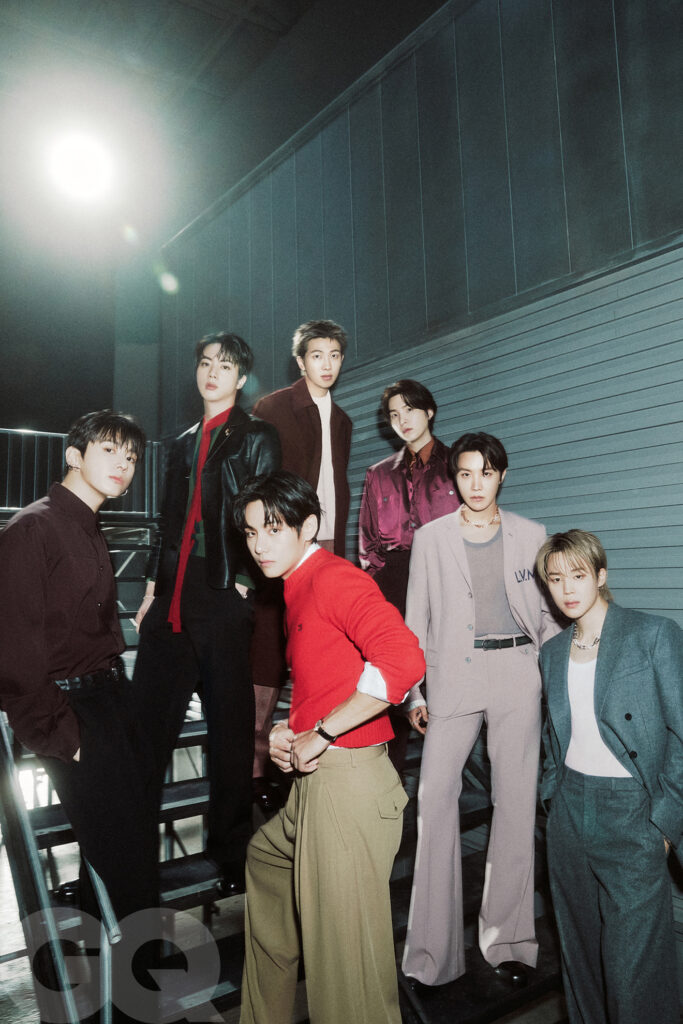
It’s clear that, for these guys, there’s true strength in numbers. And even the crushing pressures of a massive pop comeback can be relieved with jokes and brotherly banter. At one point during our conversation, apropos of nothing, Jimin dramatically takes off his jacket to reveal a ribbed vest top clinging to his trim torso, fighting for its life. “Sexy!” Jung Kook exclaims, a response Jimin visibly appreciates, playfully flexing his arms and pinching his biceps, distracting his bandmates from their philosophising.
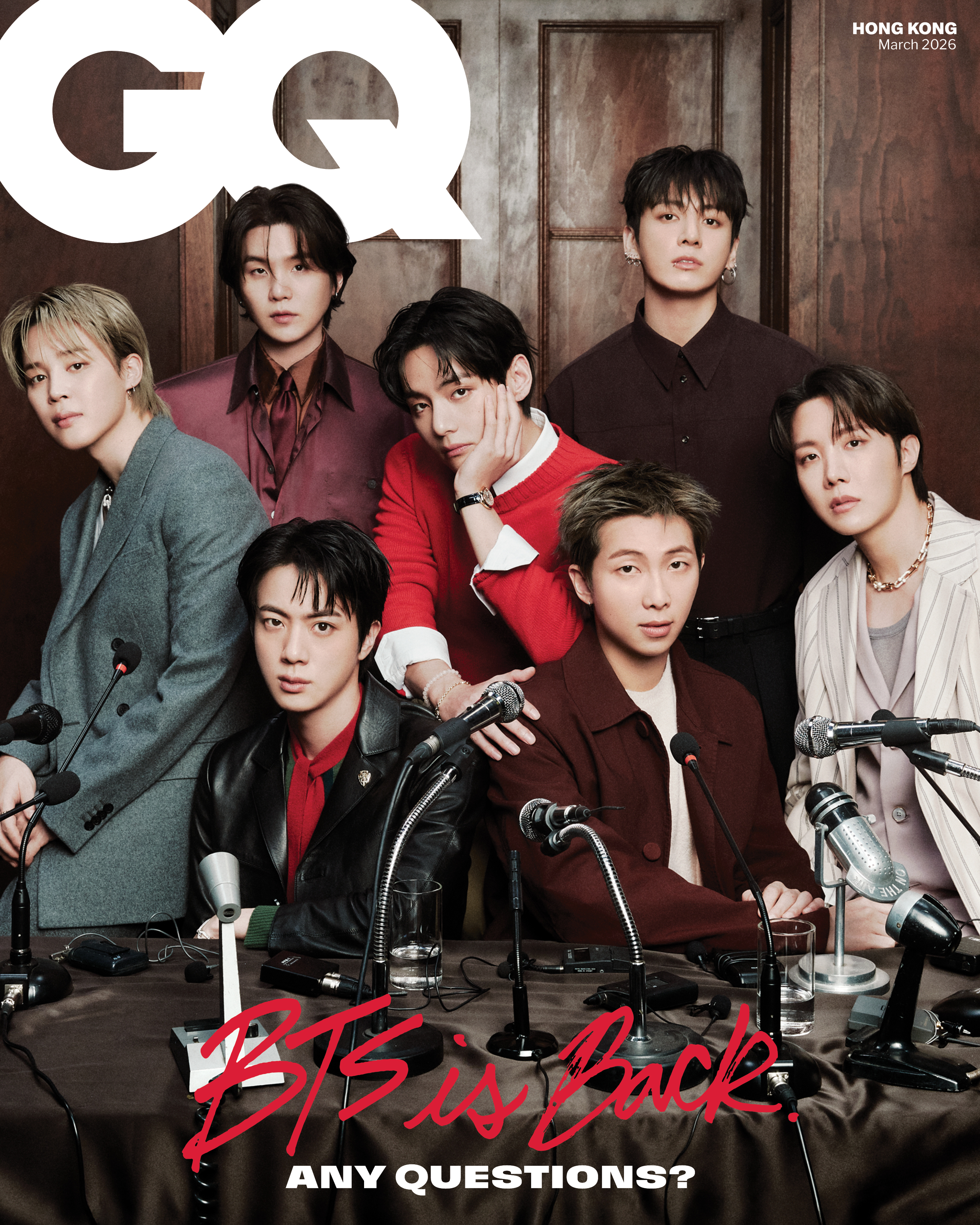
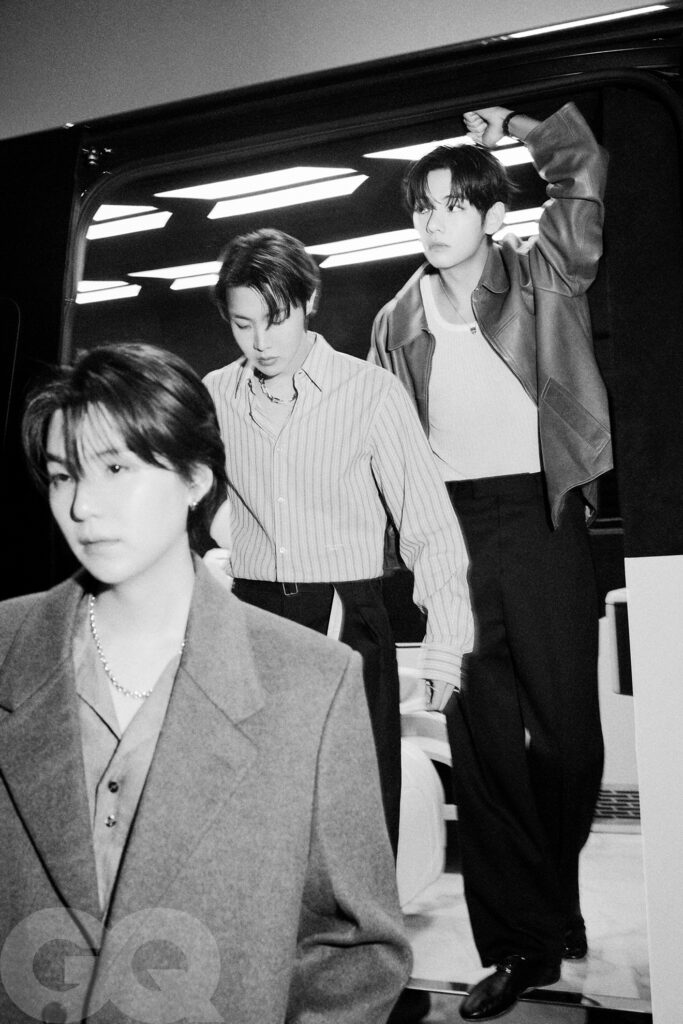
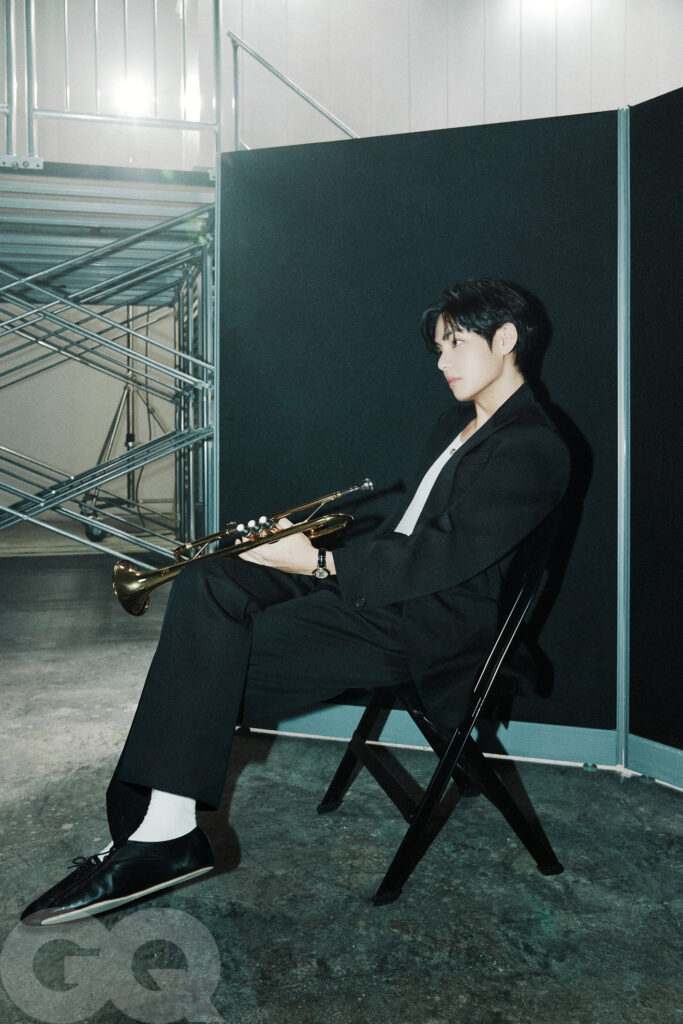
I witnessed this dynamic during our cover photo shoot too, when V animatedly danced to Wiz Khalifa and Snoop Dogg’s “Young, Wild & Free”, as if daring Suga – who had to hold still as he was touched up by the hair and make-up team – to join him. And as J-Hope walked away from his solo portrait, Drake’s “Hold On, We’re Going Home” played over the speakers – a song he evidently can’t resist, belting out “We’re going home” in full falsetto, putting a momentary stop to the shoot. (It’s a little staggering, hearing massive pop stars letting it rip a few feet away.)
“They just share a strong bond with each other and genuinely communicate as a group,” said Megan Thee Stallion, who collaborated with the band on the “Butter” remix and with RM on her single “Neva Play”. “It’s so rare to see that collective level of humility, love and teamwork, but it’s a special dynamic.”
“What I feel about the seven BTS guys,” said Coldplay frontman Chris Martin, “is that they have been – it seems, from knowing them a bit – made closer by that very intense process [of becoming stars].” Martin and Coldplay collaborated with BTS on the number one hit “My Universe”. “I was really happy that it seemed like they had each other’s backs. They’re very tight, personally, and they intertwine well. They don’t tread on each other’s toes too much. There are distinct roles… The love between them is real. That was the most striking thing – love in a very intense situation.
“At a certain point, just like you can’t really understand what makes music magical, I think it’s the same with bands,” Martin continued. “And that’s why we love bands sometimes: we don’t really know why. Why is this group of seven people a magical thing, bigger than the sum of its parts? Beyond the fact that they work extraordinarily hard and that they’re kind to each other and they love what they do, there’s a certain magic that I don’t know how to explain.”

“We tend to recommend music to each other when we like something. That’s why we tend to like the same music at the same time.” –J-Hope
Lost in all this talk of their long-awaited comeback is the fact that, over the past few years, the members of BTS encountered something out of reach for most ultra-famous celebrities—they experienced becoming regular people again.
Nearly all male South Korean citizens between 18 and 28 are required to serve for roughly 18 to 21 months in the military due to the permanent threat of conflict with North Korea. Almost no one gets an exemption (save for Olympic medalists). Before they enlisted, there was some speculation that the members of BTS would be granted one—after all, they were practically national treasures. But they soon surprised the world by enlisting, staggering their service—with Jin going in first and Suga completing it last—so that there would always be BTS members active in the public sphere as solo performers, a highly coordinated effort that ensured their beloved ARMY would never miss their presence.
By fulfilling their military duty, in roles as varied as drill instructors (Jin and J-Hope) to military cook (Jung Kook) to special task force (V), the members were able to experience the tedium and routine of daily life like their fellow 20-something Korean citizens. Suga, for example, served as a public-service worker, reportedly due to a shoulder injury, going from headlining stadiums around the world to clocking in at an office.
“I was actually never, ever late to the office,” Suga says, proudly. “I always came in 10 minutes early. I got ready for whatever I had to do for the day. It was at first weird for me to always get to some place on time, and always go home at the same time, but I got used to it, and later it just became part of me.” (That routine eventually influenced his music making too: “Before I went to the service, I would usually work on music at nighttime or very late at night, but I actually used the daytime to work on songs after I just got discharged.”)
“Being put into a totally different world for us and adapting was, of course, difficult,” J-Hope admits. “But humans are funny because they learn to adapt pretty quickly. I do feel that I have become healthier, and I got to learn more about life and different sides of society. I also got to know a lot of new people, which was a big plus. And being in the military and serving in the military is something that every man in Korea goes through.”
“It was so, so hard, I was going to cry,” Jimin says, pantomiming tears while cracking up. “It was very challenging. But being able to be in those shoes and experiencing that meant a lot to us.”
One of the group’s most memorable reunions was actually during the break.
“It was before we all got discharged from the military service. And Jung Kook cried, he bawled,” V says, recounting his bandmate’s desire for the group to reunite in earnest. “Jung Kook cried because he really wanted to be onstage, and he just really wanted to perform.”
“It was before we all got discharged from the military service. And Jung Kook cried, he bawled,” V says, recounting his bandmate’s desire for the group to reunite in earnest. “Jung Kook cried because he really wanted to be onstage, and he just really wanted to perform.”
“We all treasure BTS more than we treasure each one of us separately. We debuted as a group, so I think that’s the core identity that we have.” –V
“I could really feel how much love and passion Jung Kook has for our stage performances and music,” Suga adds.
Through all this, Jung Kook, the youngest, feigns ignorance. “I don’t really remember,” he says, with a laugh. “But everyone was there.”
Apart, the seven grew professionally. Each member released distinct, impressively fully formed projects. From boom-bap hip-hop (J-Hope’s Jack in the Box) to Peter Gabriel–esque power ballads (Jin’s “The Astronaut”), from chart-topping Top 40 hits (Jung Kook’s “Seven,” Jimin’s “Like Crazy”) to introspective meditations on existential ennui (RM’s Right Place, Wrong Person album), from trilogy-length artistic statements (Suga completed his third release as his alter ego Agust D during the break) to short-but-sweet EPs (V’s Layover), the past few years have showcased the members of BTS stretching artistically. They’ve collaborated with legends like Erykah Badu (RM); the late, great Ryuichi Sakamoto (Suga); J. Cole (J-Hope); and even revered Wong Kar-wai collaborator Wing Shya (RM again), to bring their visions to life. As a result, the seven have blossomed into self-styled auteurs with their own unique obsessions and increasingly distinct ways of doing things.
The pop star Halsey, who worked with the band on the 2019 hit “Boy With Luv” and worked with Suga separately on her Manic album and a reimagining of her song “Lilith,” paid close attention to each member’s burgeoning artistry. “They have all had such unique solo journeys that truly reflect their individual style and strengths,” she said in an email. “I wasn’t surprised, necessarily, but really impressed with how tastefully their solo work was handled. I think the most exciting thing about everyone’s projects was getting to see them flourish as songwriters and watch their personal flair come front and center.”
“The solo activities, for me, was like a wake-up call,” Jimin says. “I knew that I had to practice a lot and grow as an artist and widen my spectrum before we banded together as one. I was looking at the performances and solo activities of other members and I thought, Oh, I could do that too. They’re doing very great.”
“What I really loved about working solo is that you get to learn more about your taste, especially when you’re collaborating with these music legends,” says J-Hope. “And you get to learn more about yourself, you get to learn more about your own colors, what kind of taste you have.
“I think it was a steep learning curve for me to be able to do that,” he continues. “That’s why I think it’s more meaningful that we’re coming together as a group…. I got to learn a lot, and experiences are invaluable. You can’t buy that with money.”

“I know we’re here because we are a team and we started as a team and we very much acknowledge that. And also, we have a lot of fun together.” –Jimin
Despite their explosive solo successes, there was never any real doubt in their minds that they would be getting back together.
“I know we’re here because we are a team and we started as a team and we very much acknowledge that,” Jimin says. “And also, we have a lot of fun together.”
“We all treasure BTS more than we treasure each one of us separately,” says V. “We debuted as a group, so I think that’s the core identity that we have.”
“I love you, man,” Jimin tells V.
“But if we have too much time together, I don’t want to see that!” V cracks.
It doesn’t always—or maybe ever—happen this way. Do you remember when ’NSync went on a hiatus after Justin Timberlake wanted to pursue his own career? A temporary break that eventually became permanent, as his solo career earned him the industry credibility the band never had?
Or when the Spice Girls continued on—sans Ginger—with new music? Only for Scary, Sporty, and Posh to crowd their feverishly anticipated third album by launching solo efforts within months of its release? (Baby, at least, was on message.) That album, Forever, ultimately tanked, and the promised world tour never transpired.
To go even further back, there was the Jacksons’ Victory tour in 1984, a moment meant to trumpet the family band’s longevity that eventually felt more like a sad trombone cuing its end. Tensions between the brothers escalated on tour so much that on their final night headlining Dodger Stadium in LA, Michael—hot off the success of Thriller—went rogue and announced that it would be the last time the band would be performing together.
The annals of pop-music history are bursting with more examples of great bands that met their demise due to intraband dynamics and the temptation of solo careers than ones that went on a break and successfully reunited. The fact that all seven members of BTS have had successful solo efforts that handily showcased their individual identities as artists but are making good on their promise to get back together and continue working as a band, is a triumph in itself. The boys increasingly have individual passions, highly personal artistry, and busy lives of their own.
“They’re just good people. It’s as simple as that,” Halsey said. “They are respectful of each other and inclusive of everyone’s opinion and ideas. There’s a really clear vision of what BTS is so everyone knows what’s on the agenda, and they’ve hit such a stride in how their individual strengths support that central vision. It’s not a really egocentric environment. There’s no way it could be, considering how focused they are on representing BTS and rewarding the fans.”
It’s a testament to the God-honest friendship and their devotion to the ARMY that this is all happening. People always say they will and they don’t. It never happens.

“If we can keep this going, then maybe we can be dancing in our 60s.…As long as we’re willing—I think maybe into our 50s, into our 60s—we can always be together as a band.” –Suga
In some ways, everything changed for RM at the 2022 Grammy Awards.
Nominated for the funky, infectious “Butter,” BTS went into its category riding high on its second career Grammy nod and the rapturous reception to the showstopping performance it delivered earlier in the telecast, bringing both bulletproof efficiency and an infectious air of camaraderie to the sometimes stodgy proceedings. It all made its eventual loss in the best pop duo or group performance category (to Doja Cat and SZA’s smash duet “Kiss Me More”) all the more disappointing to its fans—who quickly made the hashtag #scammys trend on Twitter and accused the show of using the band to drum up viewership. But RM had other things on his mind that night. Watching Lady Gaga’s theatrical and emotive tribute to her friend and mentor Tony Bennett and H.E.R.’s electric medley with Lenny Kravitz and Travis Barker, he reflected on what it meant to dedicate your entire life to music.
“I think the performance of ‘Butter’ we put on at the Grammy Awards astonished people,” he later said in an interview with Weverse, two months after the performance. “I think it’s time for us to move beyond astonishing people and think again about what kind of messages we can send people now.”
“I definitely had a grasp of what this group is back in the day, but now it seems like I hit this phase where it’s impossible for me to know what the group is like or even who I am that clearly,” he continued. “What should BTS be saying to the world from now on? What position should BTS be remembered for taking at this point? How are we going to function moving forward?”
Sitting with the band today, almost four years after that evening, I pose those same questions back to the group’s leader. After a period of being by themselves—growing as individual artists but also as men—what will BTS be, moving forward?
Sitting up straight, RM considers the question. “The 13 years of the journey of BTS—for personally, myself—started with ‘I know this team,’ ” he begins, referring to his story as the band’s founding member, the bright-eyed 16-year-old trainee that Big Hit Entertainment built the rest of the group around. “This team started with me, myself. And then it just became…man, I don’t know….
“The company, the label got so much bigger,” he continues. “The world is getting more complicated and confused even more and more. The platform has changed, the technology has changed so fast—getting faster and faster, it’s accelerating.”
Ten years ago, success to the band just meant being number one on the charts. “Our only goal was to rank number one in the TV music shows,” Jin says, referring to the popular Korean television genre. “That would give us so much delight to be ranked number one. And after that, we grew as artists…. I think we can only be here because we were very hardworking back then.”
“I think we’re still confused,” RM says, with characteristic honesty. “But we’re trying to find a little piece of gold inside this confusion.” To get that clarity, the group knew they had to return to the foundation of BTS: each other. They entered a songwriting camp for the first time, working with the music industry’s best songwriters and producers in Los Angeles.
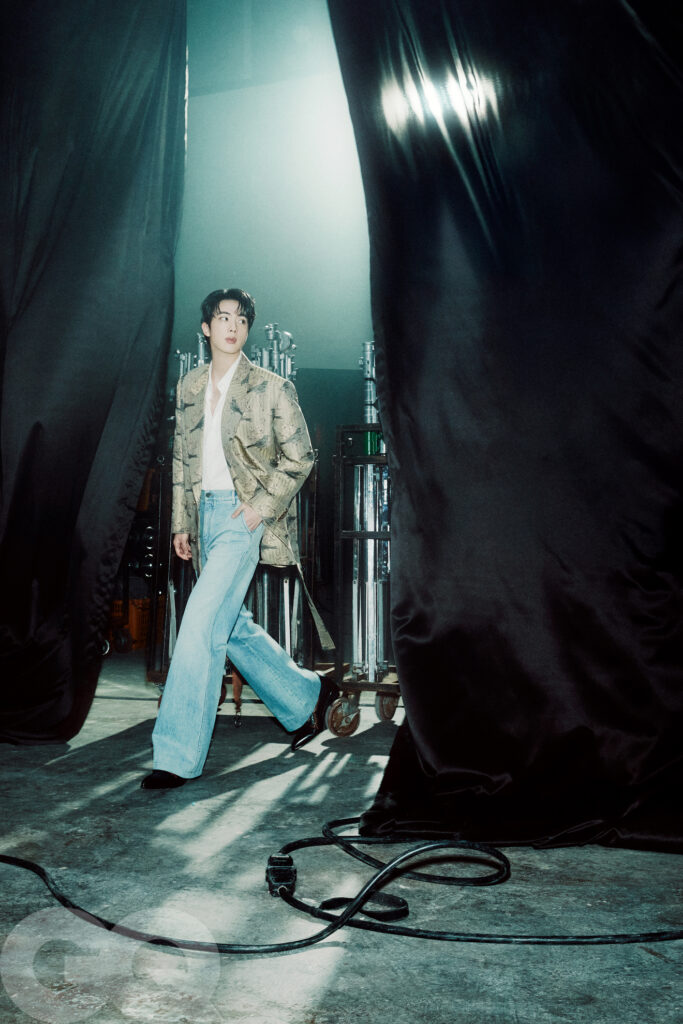
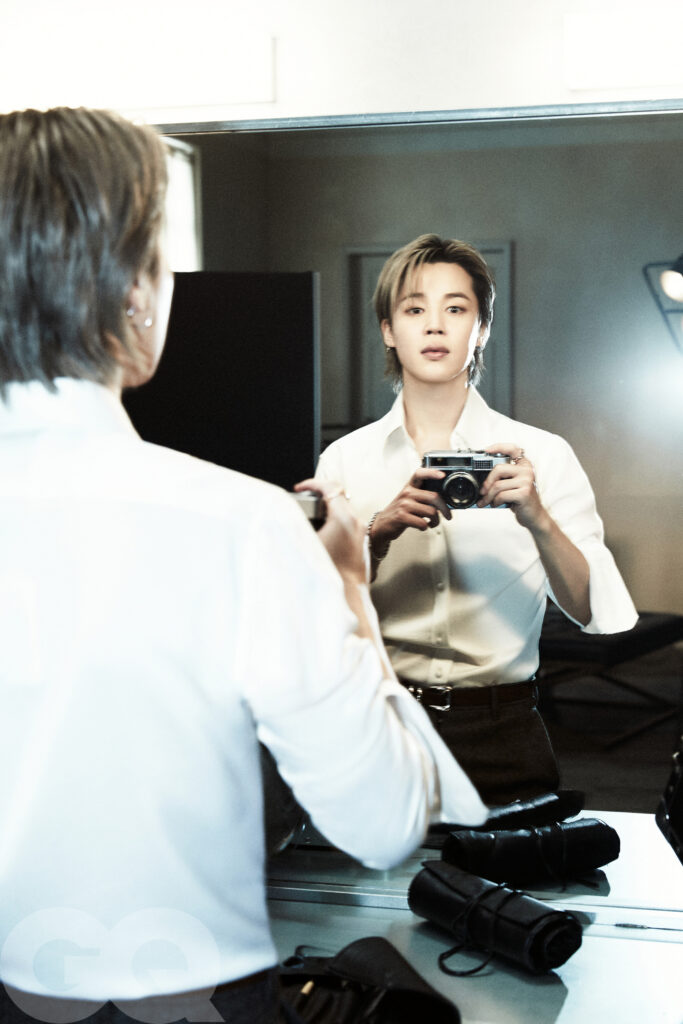
In songwriting camps, some of the industry’s top songwriters and producers are typically assembled in one place and divided into several rooms with the express task of producing the next chart-toppers and fan favorites for pop’s biggest acts. It’s a tradition as old as our modern conception of pop music itself, going back to the competing teams of the Brill Building and the assembly-line approach of Berry Gordy’s Hitsville U.S.A.
Early in BTS’s career, it was the rap line—RM, Suga, and J-Hope—who led in terms of songwriting and producing, crafting the bulk of some of their hits themselves. Through the years, though, the other members have grown into songwriters and producers in their own right, now boasting several songwriting and producing credits. The group’s artistic maturity, honed further during its time apart, had an exciting effect on this album’s sessions.
“We’re all very ambitious, still, about writing music and creating music,” says Suga. “Depending on the different songs, there would be one member who would be the leading person who would contribute to the writing of the song.” Jimin, for example, expanded his skill set, learning new techniques on the music software QBS.
Jung Kook enjoyed the routine of the camp. “It was really fun because we had three rooms in the studio,” he says. “Sometimes, we would pair up to go into a studio room. Sometimes, it would be just one of us and then we would switch pairs so that we could have different ideas and different types of collaborations. So it was our way of breaking away from molds, and sometimes it worked out really badly, sometimes it worked out really nicely. But the whole process was very liberating and free, so it was very fun.”
Jin found his younger bandmates’ enthusiasm inspiring. “The younger brothers are so persistent,” he says. “They have so much passion.”
Speculation around the new album, which will be released March 20, is at an all-time high. Already, ARMY sleuths have reportedly identified big-name songsmiths like Max Martin (the legendary Swedish songwriter-producer behind everything from “…Baby One More Time” to “Blinding Lights”) and Jon Bellion (the songwriter behind songs like Miley Cyrus’s “Midnight Sky” and Justin Bieber’s “Ghost”) as possible collaborators for the project.
The members are careful not to share too many details about the album, but what they can say is a tantalizing enough prospect. “We have a diversity of genres,” Suga says. “What I can tell you is that it’s going to be quite different from the BTS albums and sounds that you’ve been listening to. You’re going to see a more mature side of BTS this time around.”
“It’s truly the whole package,” RM says. “I can tell this next album is going to enlighten a little of that confusion.”
Two weeks after my interview with them, I’ll receive a message from the band about their album title. They’ve chosen to name it Arirang, after a widely known anthem in Korea, reflecting the country’s history. They wanted a name that represents who they are as a group and the stories they want to tell. “ ‘Arirang’ is a traditional Korean folk song that transcends time and generations, long associated with emotions of connection, distance, and reunion,” they wrote.
It feels like an apt name for this chapter of the group, one that finds them reuniting with their ARMY and one another. It’s notable, too, that during perhaps the most highly anticipated moment of their careers, the seven have chosen to turn the world’s attention to their roots, the country that made them. BTS, after all, has always had the innate ability to sidestep the limitations of language and be thoroughly, emotionally legible to their countless global fans.
In their solo work, the members have been unafraid to tackle the darker aspects of contemporary life. Take Suga’s work as Agust D, an angstier, more raw alter ego that saw him grapple with mental health and societal pressures, or RM’s album-length meditation on self-acceptance, Right Place, Wrong Person. In this next chapter of their work as a band, it’ll be interesting to see how they can marry that ripened maturity to the sound the world expects of them.
“I do understand that being idol groups and boy bands and girl groups in the K-pop industry, it might feel like it’s a little bit restraining about the negative sides of life,” says Suga. “But I think as artists and as individuals, you have to be able to express both the positive and the negative sides of life. I think we are slowly heading that way because this album has a lot of introspection and thoughts…things have changed and we are still changing.”
In an attempt to understand where the guys are at, sonically, I ask them what they’re currently obsessed with. V shares that one of the group’s collaborators introduced them to the music of the experimental rapper Jean Dawson. “It just impacted me so much because it flew in a totally different way than I thought it would,” V says. “It gave me a lot of ideas on how music could flow and what kind of direction it could head towards.”
At the very beginning of BTS, RM, Suga, and J-Hope held a makeshift hip-hop school at the BTS dorm, giving the other members a list of about 50 artists to immerse themselves in, highlighting canonical work by the likes of 2Pac and Nas. This happened after their actual rehearsals as Big Hit trainees. Some nights, the self-starting Bangtan Boys would come home from rehearsals at 11 p.m. and hold their “school of hip-hop” sessions until 6 a.m., giving up sleep to nurture their musical education.
That shared love for musical discovery is foundational to the band’s dynamic and something that has carried on to the present. Even today, this is apparent on social media when several members of BTS will post music by the same artist at the same time. Last summer, for example, there was a span of a few weeks when J-Hope, RM, V, and Jung Kook all posted songs by the buzzy alternative R&B artist Dijon on social media.
“We tend to recommend music to each other when we like something. That’s why we tend to like the same music at the same time,” says J-Hope. “We do have different tastes, but we do have overlaps.” (For his part, J-Hope is currently obsessed with Rosalía’s avant-garde Lux.)
Before I know it, all this music talk inspires the boys to start whipping out their phones, in a round of “I’ll show you mine, if you show me yours”—Spotify Wrapped, that is.
“I’m 24,” Jung Kook says.
“Twenty,” says J-Hope.
“I’m 77,” Suga says.
“I’m 88,” says V.
“89,” says Jimin. “Grandfather!”
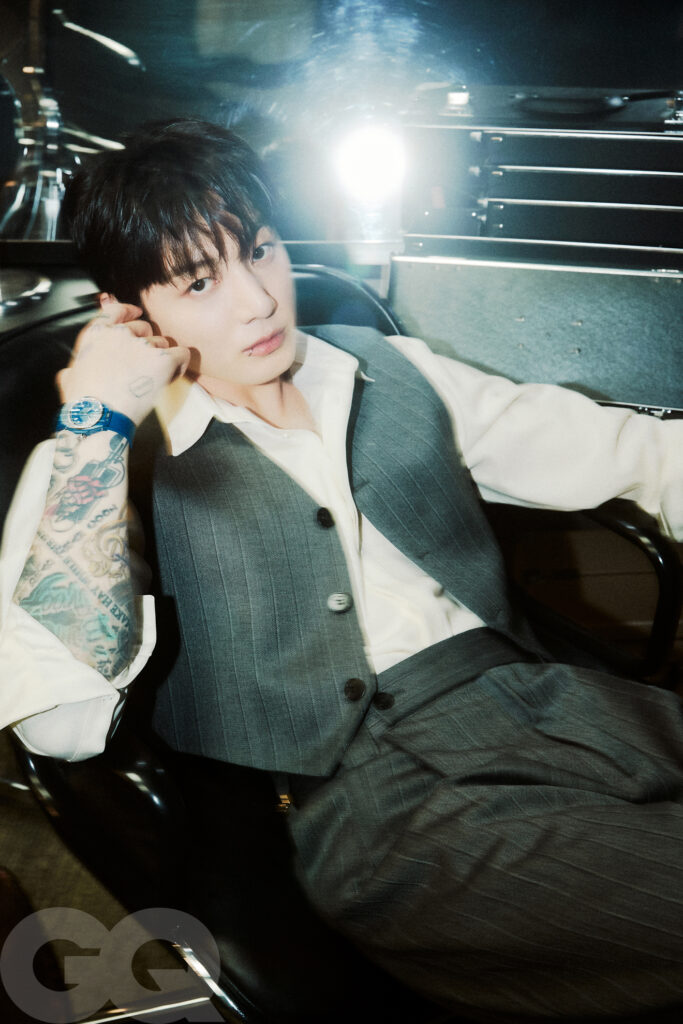
“The whole process was very liberating and free, so it was very fun.” –Jung Kook
BTS’s own rise built on the strides made by the generations of K-pop acts before them—the canny adaptation of innovative pop music from the West; the dense, striking visual storytelling that rewards repeat viewings; the strategic harnessing of technology—but with an authenticity and relatability that were all their own. If previous K-pop stars impressed with a polished impenetrability, BTS made themselves knowable, the quality that’s also allowed them to transcend the genre entirely.
In a 2024 interview with The New Yorker, Hybe chairman and founder Bang Si-hyuk said that his strategy was “trying to figure out the most fandom-friendly thing to do and then taking it to the extreme.” Instead of leaning on TV appearances, he established a YouTube channel for the band even before its debut, allowed the members to run their own Twitter accounts and be extremely candid in video blogs, vlogging through their lowest moments and live-tweeting drunken nights out on the town. “I didn’t want them to be false idols,” Bang said. “I wanted to create a BTS that could become a close friend.”
That constant dialogue with their followers helped birth ARMY. In contemporary pop music, the stan army is all but a given. They’re devoted and intensely supportive, often serving as a pop star’s street team and sometimes spending thousands of dollars to see multiple shows on the same tour. But ARMY takes that to a deeper, more intense, even altruistic level (they regularly organize charitable drives, including for BTS’s collaborators, like Halsey).
Last year, ARMY even sent a seven-year-old BTS song up the charts again, as a way of communicating a message to the members. The 2018 single “Anpanman” reached number one on Billboard’s World Digital Song Sales chart and in over 75 countries. When I mention that feat to the band, they’re visibly moved. “I’m very touched,” says Jimin. “I don’t even know how to give all the love back because I’ve received so much and the love is so unconditional. I’m always thinking about how I could give back with better performances, better songs.
“It’s really hard to even know how big the love is because it’s just so vastly huge,” Jimin continues. “I think it’s mutual. We impact the ARMY, but ARMY also impacts us—it goes both ways. And when we feel these things happening, then I really do think deeper about what message we should convey out there as a team because whatever we say reverberates and it means a lot to the ARMY and we want to make sure that it makes a positive impact.”
Early in the band’s success in America, a patronizing, dismissive portrayal of members of ARMY seemed to take hold in Western coverage of the band, as if only youthful frivolity and raging hormones could explain the culture-bridging success of seven boys from South Korea. Truth is, ARMY is an incredibly diverse group of people from different countries, different generations, and different gender expressions.
I know this firsthand, looking at the ARMYs in my life: from a Manila-based visual artist and sound designer, whose work in film has won acclaim at Sundance and the Venice Film Festival and whose art has been exhibited everywhere from Singapore to New York, to a Seattle-based tech executive who routinely brokers massive deals for one of the world’s biggest companies when she’s not using her PTO to fly across the world to watch BTS concerts.
And then there’s my mother, a woman I’ve only ever known to love the music of singer-songwriters like James Taylor and Carole King, who, out of nowhere, suddenly called herself a proud member of ARMY. Like a lot of people, she fell in love with BTS during the pandemic, when my grandmother moved into our house after suffering multiple strokes and my mother became her primary caregiver, focusing all her energy on round-the-clock care for the octogenarian. During that dark time, on nights when she would have to force herself to stay awake while keeping watch on my grandmother, who was breathing through an oxygen concentrator, my mother would watch YouTube videos of the Bangtan Boys on her phone (she knew to only watch on the official BTS channels so the views counted), their playful antics providing levity, their essential goodness allowing for hope. “They kept me company during those late nights,” she tells me now. “There were so many problems, but I would watch their videos and, for a moment, they would make me smile.”
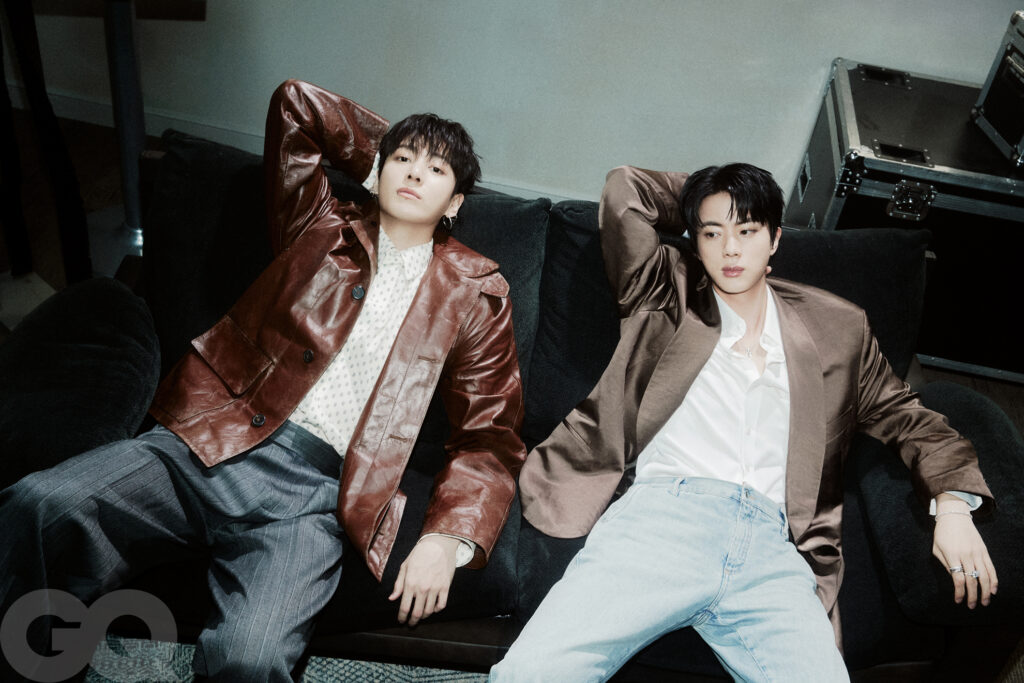
As the band prepares to release their most mature and sonically ambitious album yet, I ask them if the Grammys still represents a pinnacle to them, if winning a trophy is still a goal. “I don’t know,” says RM, “because time has passed. There are a lot of K-pop-related nominees you see in the general field and, really, I want to send big applause for them.”
“I mean, we’ll try,” he adds later. “Maybe we’ll submit our album to the Grammys again. But I don’t know, we don’t want to be desperately eager for it…. We don’t want to say anymore like, ‘Ah, man, we want the Grammys.’ I mean, it doesn’t mean that we really don’t want it—but we’ll try. But if not, then okay.”
For the band, at least, the goal was always less about the actual trophy and more about having a North Star for the group to work toward. “Typically, a band is four, right? We’re seven. For a team like this, sometimes we need such a goal to just go on,” RM continues. “The Grammys was one of the goals that we haven’t really gotten in the past, but I think now, the most important thing is just that we are here back together again, we’re going to see the fans all over the world.”
Nearly six years after their last studio album, will their hot streak continue? The thing about an “imperial phase” is it often happens only once in a band’s lifespan. When the Pet Shop Boys’ Neil Tennant coined the term in 2001, in an interview with Chris Heath for a remaster of their seminal 1987 album, Actually, he was looking back at a run in the late ’80s where it seemed like the band had the golden touch, a time when their sensibilities met the moment and they could do no wrong. In a canonical essay for Pitchfork that cemented the idea of the imperial phase (think Rumours-era Fleetwood Mac, Faith-era George Michael, and Michael Jackson from Off the Wall to the start of the Bad era) in pop discourse, the critic Tom Ewing wrote, “There’s something double-edged about the concept: It holds a mix of world-conquering swagger and inevitable obsolescence. What do we know about emperors? That they end up naked: The phase always ends.”
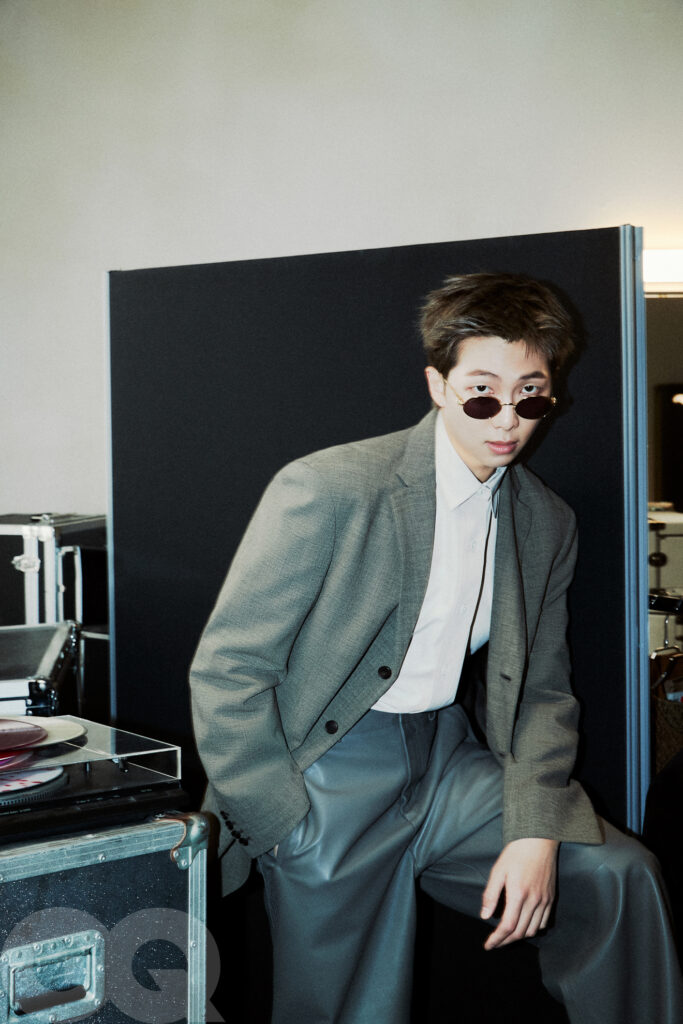
“Now, the most important thing is just that we are here back together again; we’re going to see the fans all over the world.” –RM
But of course, there are always exceptions to the rule. And time and time again, BTS have proved themselves the exception to every pop rule: They were the underdog K-pop band who weren’t supposed to be able to compete with acts from the big three companies, the global breakout that some pegged as a novelty. If any hugely popular contemporary band were to defy the odds, it would be them.
Theirs is the kind of impact that can only be meaningfully compared to the Beatles or the Supremes. Just like the Fab Four, BTS was crucial in bringing the music industry of a whole nation to the center of global pop. And like Motown’s lead girl group, the band’s shiny packaging and catchy hooks have served as an effective Trojan horse for lasting social change, breaking down racial barriers and paving the way for more Asian visibility in mainstream culture. When comparisons between BTS and the Beatles started cropping up around their US breakthrough, it wasn’t just because of statistics, it was a recognition that this, too, would be a true generational force, the closest thing to monoculture in our fractured times.
And the members of BTS have known how fickle fame can be from the very beginning. Starting out in K-pop, a music industry so competitive and transient that every release following a debut is called a “comeback,” regardless of how much time has actually passed, they knew not to take anything for granted. Making it past the 100-day mark is not easy. Every single, every comeback, must be a smash, in order to make financial sense to the company and for a group not to be disbanded. (In this way, the customs of the court are similar to aughts-era UK pop, where even generational acts like Sugababes and Girls Aloud lived single to single for a surprisingly huge swath of their careers.)
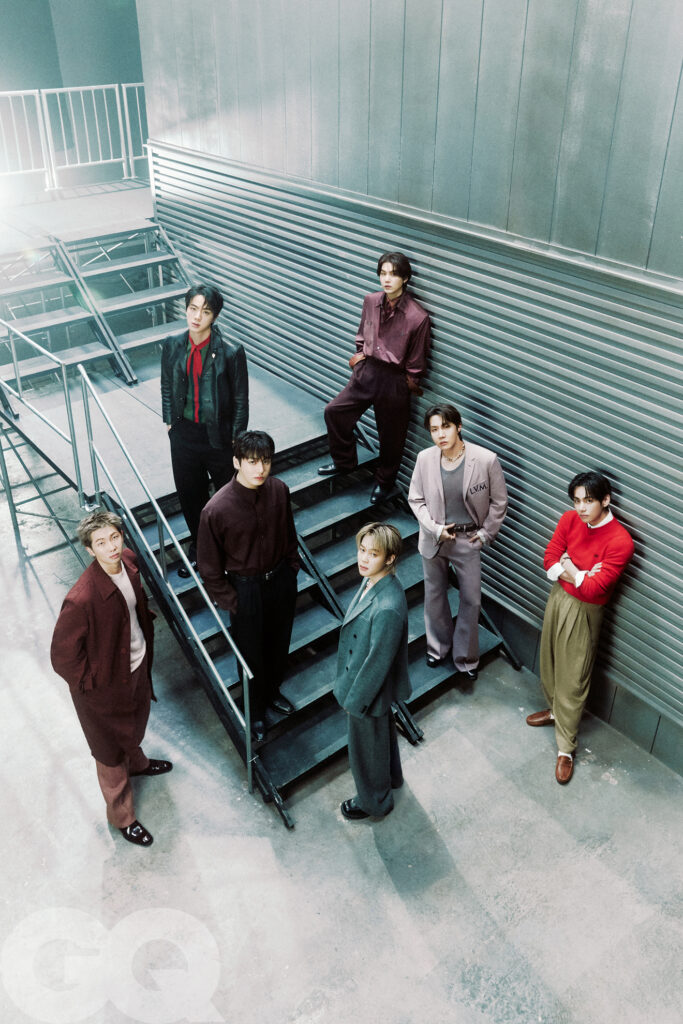
“I think we can only be here because we were very hardworking back then.” –Jin
“I think BTS are innovators,” Halsey said. “I don’t think they need to worry about what’s happening ‘now’ because they’re always going to trail-blaze what happens next…. It’s all sort of ‘background noise’ for a generational act of musicians who know how to take the noise that actually matters to the forefront.”
In September 2013, when BTS hit their 100-day milestone, they marked the occasion with a special radio show, celebrating with cake, giddily singing “congratulations” to one another. Watching the clip now, almost 13 years later, it’s striking how much none of what followed seemed a given at the time—not the massive hits in South Korea, the devoted fan base that helped them break through around the world, their current status as pioneers and superstars. The Bangtan Boys were just that—boys—dreaming of what could be, hoping for the best.
On the program, Suga said in Korean, “It’s been exactly a hundred days since we debuted. I think we’ve been able to make it this far all thanks to our ARMYs.” Looking at his bandmates, he continued, “Whether it’s a hundred, a thousand, or ten thousand days, let’s stay together.” With no hesitation, his bandmates responded in unison: “Let’s stay together!”
Sitting down with the band now, shortly before their grand return, I ask Suga if it still feels that way, if the next hundred, thousand, and ten thousand days still feel promised.
“The reason why I said that was because in the earlier days of showbiz, there’s so much going on and your lifespan can be pretty short in the business,” Suga says, reflecting on that time in their life together. “I was worried, ‘Until when we would be able to do this?’
“But now, I ask the same question under a positive light. We’re still very good friends. The fans still love us—they want us, they support us. If we can keep this going, then maybe we can be dancing in our 60s…. As long as we’re willing—I think maybe into our 50s, into our 60s—we can always be together as a band.”
Then, looking at the six bandmates he’s already lived a few lifetimes with, Suga smiles and says, “Maybe it’ll be a little bit hard on our knees. But I think we can do that.”
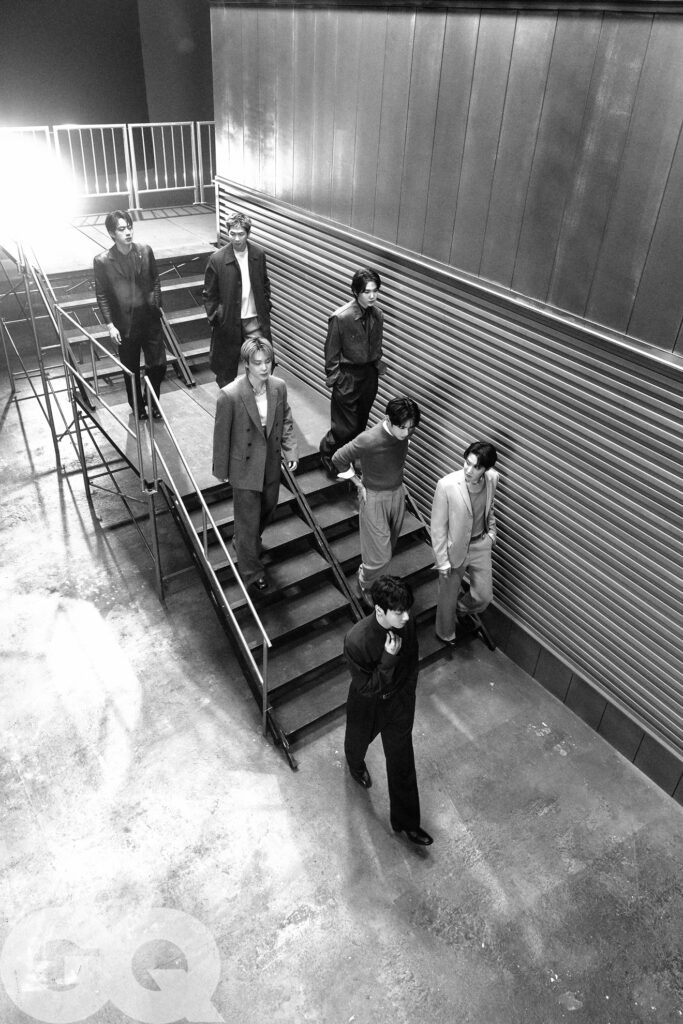
Photographs by Dukhwa Jang
Styled by Mobolaji Dawodu
Hair by Naejoo Park, Hansom and Hwayeon Kim
Makeup by Dareum Kim and Shinae Lee
Set design by Minkyu Jeon
Lighting Direction by Hyunjung Go
Produced by Nuhana